ISSUE 001 / OCTOBER 2026
The things we
couldn't afford
to make.
Films, hardware, software, mathematics, and biology.
Five projects using AI to make something useful.
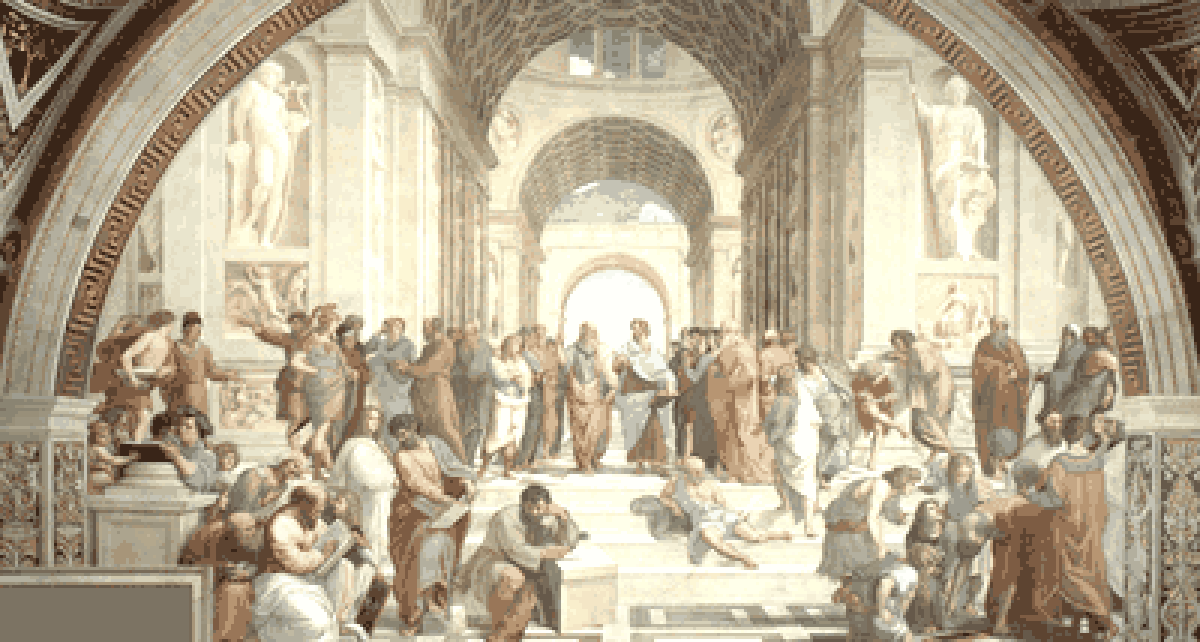
 AFTER RAPHAEL / THE SCHOOL OF ATHENS
A music video with an underwater palace. Software too specific to be a business. Protein predictions a small lab can download instead of paying to compute.
These are good uses of AI. They let people attempt work they might otherwise have abandoned, or use research they couldn't afford to reproduce. We'd like more of that. A second renaissance needs people making films, building instruments, and asking their own questions.
Here are five projects worth a look, from a new mathematics paper to tools released earlier this year.
Film & music
Two kingdoms, weeks of work, under $1,000
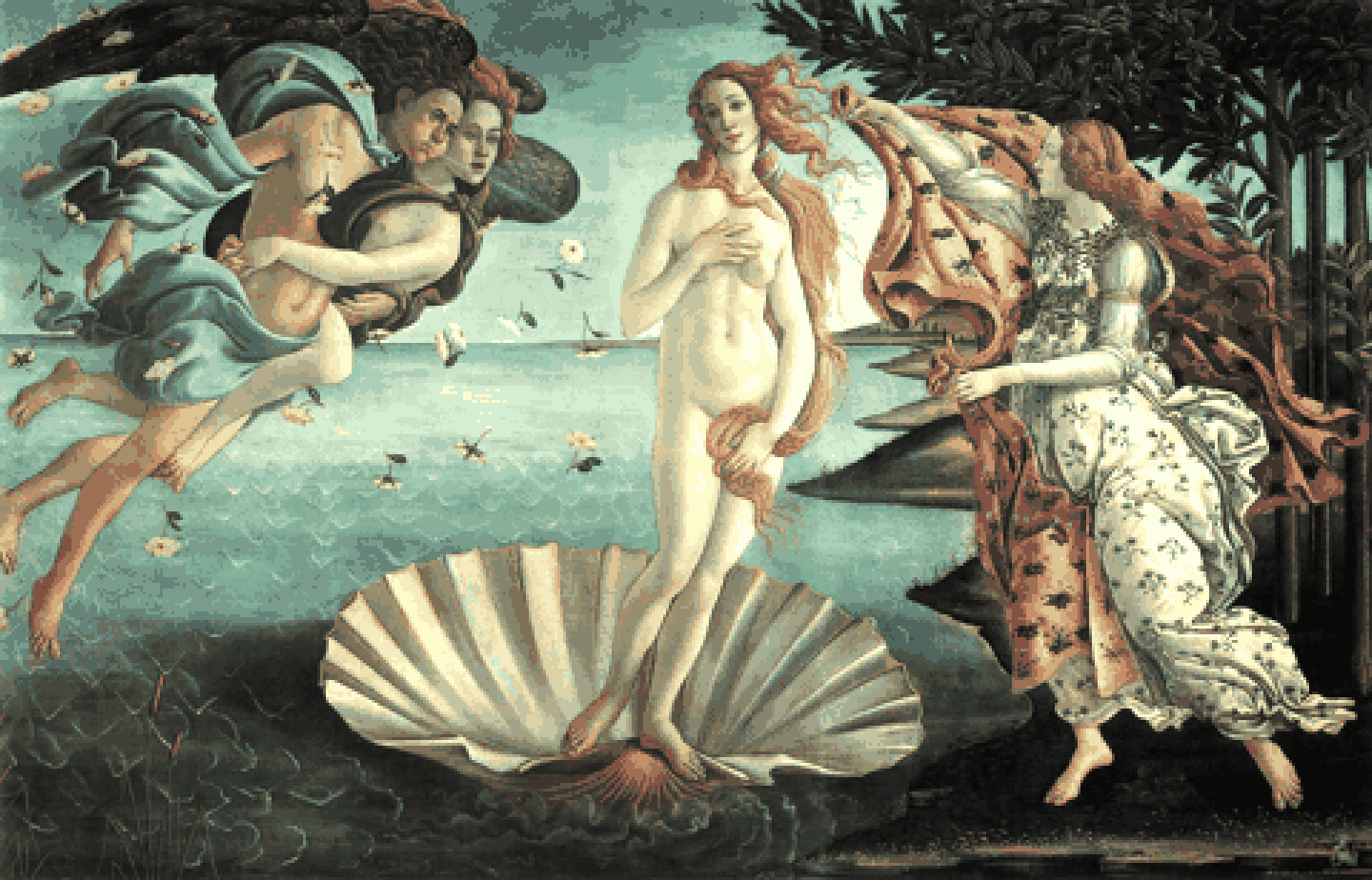 FILM & MUSIC
01 / GAIA
For C. Girinandh's music video GAIA, Manish and With Media built two fictional civilizations. One draws on Chola architecture and sits underwater.
Their production breakdown ↗ is unusually specific. They modeled a city in Blender, placed cameras inside it, and used those views to guide the generated shots. Character reference sheets kept faces and costumes consistent. The composition was settled before the generation began.
The studio reports spending less than $1,000 on the video, mostly on generation credits and an upscaling license. That figure excludes recording and mixing the music. Preparation took weeks; the post doesn't put a price on that labor.
An underwater palace is a good use for this process. A small production can spend its time designing the place without having to finance its construction. Watch GAIA ↗.
Also on the watchlist: Robert Gaudette's 7:50 short A Face Only A Mother Could Love, Grand Prix winner at Runway's 2026 AI Festival. Festival lineup ↗.
Make a three-shot sequence
Find an establishing shot, a close-up, and a detail. Save each frame, then step through your cut.
Hardware
Backplane puts agents inside the CAD tools
Backplane is an open-source hardware workspace built around a KiCad fork, with KiCad and FreeCAD viewers and CAD-specific agent instructions. You can inspect an agent's changes and point to individual components while discussing a design. Code and installation ↗.
That could make electronics easier to learn: ask about a component, see where it sits, and follow the proposed change in the schematic. It gives the explanation something concrete to refer to.
The repository establishes what the tool offers. It doesn't establish that a novice can use it to ship reliable hardware. We'd like to see build reports next: design files, a fabricated board, measurements, and the mistakes along the way.
Connect the signal
Rotate the tiles to carry the signal from IN to OUT. Gold traces are connected to the input.
0 rotations · 0 connected tiles
Need a hint?
Start in row 2. Travel right, down, right, up, right, then down and out. Every neighboring trace must meet.
Software
Software for a problem too small to sell
Simon Willison's browser-tool collection ↗ is full of small utilities built mostly with LLM assistance. He publishes the development transcripts and source code ↗, under an Apache-2.0 license.
One example: Photo Scrubber ↗ offers local face redaction and metadata removal. Its interface lets you cover faces the detector missed and explains why blurring alone doesn't guarantee anonymity.
This is a useful scale for software. Someone has an annoying problem, builds a tool, and leaves the code for the next person. It can be worth making even if nobody would pay a monthly subscription for it.
Willison is an experienced programmer. His collection is a good place to study how he works, including the checks he asks for, rather than assume the model did everything.
Make a pixel stamp. Keep the tool.
Selected ink: Lapis
Choose an ink and paint the squares. Download the picture, or take the whole editor as one HTML file.
Mathematics
A better bound on Sidon sets
On October 28, Terence Tao described a new paper with Daniel Carter and Kevin O'Bryant on Sidon sets. In these sets of integers, every unordered pair has a different sum. How large can such a set be if its numbers must lie within a given range?
The paper grew out of a discussion on Tao's blog about AlphaEvolve improving bounds on that question. The researchers refined the approach, stalled for several months, and published what they had. Another method has since produced a slightly sharper bound; Tao says the method is the focus of their paper.
It's a modest, specific result with an account of how the work proceeded. The preprint gives other mathematicians something to check and extend. Tao's account ↗ · The paper ↗.
Pick four numbers. Avoid repeated sums.
Choose four numbers from 1 to 12. Every unordered pair, including a number paired with itself, must have a different sum.
Show a hint
Try starting with 1, 2, and 5. Look for a fourth number whose new sums do not collide.
Biology
Compute it once. Let other labs use it.
The AlphaFold Database now includes predictions of protein complexes: proteins interacting with each other.
EMBL-EBI reports 1.7 million high-confidence predictions for pairs of identical proteins, called homodimers. A May update added almost 80,000 high-confidence predictions for pairs of different proteins, or heterodimers. Lower-confidence results are available separately in bulk. Release details ↗.
Researchers still have to test these predictions. But they can begin with calculations that would be expensive to repeat in every lab. Making the results openly available is a consequential choice about who gets to use the work. Search the database ↗.
Find a complementary match
Arrangement 1 / 6
Slide chain B through six arrangements. In this toy, + pairs with −, and ○ pairs with ○. Find an arrangement where all six contacts match.
Even a good predicted fit needs testing in a real experiment.
Publish the process, too
The most useful link in this issue may be the GAIA breakdown. It explains an approach another filmmaker could try: build the space, choose the shot, then generate from it. Willison's transcripts serve a similar purpose for software.
More people get to do interesting work when they can see how it was done. If you're making something with these tools, publish enough of the process for someone else to use it.
Sources checked October 29, 2026. Costs are creator-reported. We haven't independently tested these tools or watched the linked films in full.